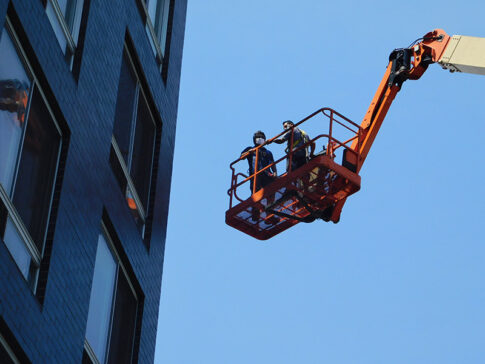
For owners, boards, and property managers planning for Facade Inspection Safety Program (FISP) Cycle 10, it helps to understand which aspects of a report tend to receive the closest review from the Department of Buildings (DOB). FISP filings are not just about describing what’s happening on the facade; DOB reviewers look closely at how the QEWI performed the inspection, how conditions are documented, and how the proposed repairs follow from those observations.
Across the city, that attention is most evident in how closely DOB reviews inspection methods, access, and decorative materials like terra cotta and stone. For owners and boards, that translates into a FISP process that benefits from careful planning, thorough documentation, and close coordination with the inspection and design team.
Key Areas of Focus in QEWI Reports
DOB reviewers look not only at the final condition rating (Safe, SWARMP, or Unsafe), but at the information that supports those ratings and the associated repair program recommendations.
Detailed comments on inspection methods, access, and scope
Report reviews often include comments and questions about:
- How the facade was accessed.
- The methods used to perform the inspection.
- The scope of proposed repairs.
- Any follow-up work referenced in the report.
Because RAND files a large volume of FISP reports, we see these themes frequently and structure our standard documentation to address DOB’s expectations upfront.
Emphasis on procedural and documentation detail
Reports are evaluated on how thoroughly the QEWI documents:
- Areas of access and the methods used (drops, scaffold, rope access, boom lift, etc.).
- The extent and locations of hands-on inspection.
- Observed facade conditions.
- How observed defects relate to the proposed repair plan.
DOB may also perform site re-inspections when filings prompt questions about conditions or completed work, using these visits to verify that reported information aligns with actually exists at the site.
For owners, this level of review means a FISP filing benefits from:
- Detailed documentation at the outset.
- Prompt responses to any follow-up questions from DOB reviewers.
- Close coordination between the QEWI, the owner, management, and the contractor.
Decorative Facades: Terra Cotta, Stone, and Cast Elements
Perhaps the greatest scrutiny in the DOB review is directed at decorative facade elements, particularly on buildings with materials that have been associated with prior failures.
Materials that often draw detailed attention include:
- Terra cotta
- Natural stone
- Cast stone
- Cast iron
RAND sees the following expectations in FISP filings involving these components:
Hands-on sounding
For these materials, visual observation alone is not considered sufficient. A representative sample of decorative units, at a minimum, must be sounded as part of the hands-on inspection to verify how pervasive the observed defects are and whether sufficient sound material remains to make the decorative segment salvageable.
Documentation of each defect
FISP reports are expected to include:
- Clear photographs of each defect.
- Elevation drawings locating every cracked, spalled, displaced, or otherwise compromised piece.
Justification of repair vs. replacement, especially for terra cotta
DOB often favors full replacement of deteriorated terra cotta units rather than patching or partial repair. When repairs are proposed in lieu of replacement, reviewers look for a clear explanation and supporting documentation showing that the repair approach and methods are appropriate and durable. Reports should explain:
- Why repair was chosen instead of replacement.
- A step-by-step description of how repairs were performed.
- Which repair materials and mortars were used.
- Progress photos documenting repairs as they were performed.
DOB’s approach to decorative facades places particular emphasis on terra cotta repairs - how durable they are, how they were performed, and how they’re documented. For owners with decorative facades, that typically means:
- More extensive hands-on work.
- Additional design and documentation effort.
- Closer review of any proposed repair strategy that does not involve full replacement.
What This Means for Owners and Managers
For owners and property managers, understanding where DOB focuses its review can help you more effectively plan inspections, repairs, and FISP filings.
Expect thorough inspections and robust documentation.
Hands-on work, sounding of decorative elements, detailed photos, and elevation mark-ups need to be considered standard expectations, especially for buildings with terra cotta, stone, or cast components.
Build time into your schedule for comments and clarifications.
Even well-prepared reports may be returned with questions. Allowing time for comment response and re-review supports realistic filing and repair timelines.
Coordinate early with your QEWI.
Talking through the inspection plan, filing approach, and possible repairs up front helps ensure your report reflects the aspects of FISP that DOB is most likely to focus on.
Work with an experienced QEWI and support team.
With DOB reviewing both the technical findings and the inspection process, it is important that your QEWI:
- Understands where DOB is focusing its attention in the current cycle.
- Is prepared to support inspection methods and repair decisions with clear documentation.
- Knows how to present terra cotta and other decorative repairs in a way that speaks to DOB’s expectations.
At RAND, our QEWIs and facade team incorporate these priorities into how we plan inspections, document conditions, and prepare filings. If you’d like to review your building’s FISP obligations or discuss how these focus areas may affect your next report or repair program, we’re here as a resource.
RAND Engineering & Architecture, DPC has been serving New York’s building community for nearly 40 years. Founded in 1987, our firm designs and administers programs for the repair, upgrade, restoration, and adaptive reuse of residential, commercial, institutional, and retail properties.
Our expertise includes exterior envelope repair - with a particular focus on FISP - parapet inspections and repair programs, window and door replacement, heating, plumbing, and electrical upgrades, garage inspections and repair programs, architectural design and ADA compliance, feasibility studies and plan reviews, structural engineering, forensic surveys, benchmarking, energy audits, and retro-commissioning, green roofs, and historic restoration.
RAND also has dedicated groups for Building Design, Industrial Rope Access, Drone Services, Infrared Surveys, and 3D Laser Scanning. We also have a Code & Zoning Compliance Team and are an accredited Special Inspections Agency.
To learn more, please visit randpc.com.