
5 Questions to Ask Before Hiring a FISP Consultant
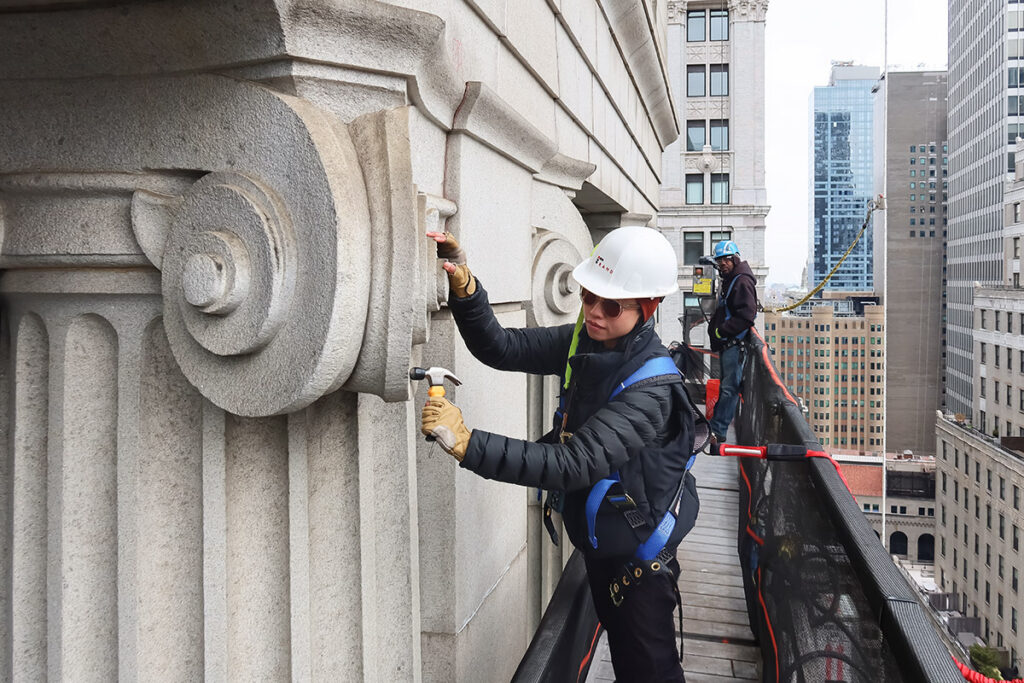
The goal of a Facade Inspection Safety Program (FISP) inspection is clear: complete the required filing, identify conditions that may affect public safety, and understand whether the building can be classified as Safe or requires further action. The consultant’s approach matters because the inspection still needs to be properly planned, documented, classified, and submitted, whether the final report identifies Safe, SWARMP, or Unsafe conditions.
Not every consultant brings the same level of FISP cycle experience, facade restoration knowledge, access planning capability, or construction-phase understanding. Those differences can matter when conditions are being documented, classifications are being determined, and next steps are being discussed with boards, owners, managers, or DOB.
As owners and managers compare consultants, the following questions can help clarify how the firm approaches the inspection, the report, and the support needed to complete the process.
Questions to Ask Before You Hire
1. How is the inspection team structured and reviewed by the QEWI?
FISP inspections must be conducted, witnessed, or supervised by a Qualified Exterior Wall Inspector, or QEWI. Ask how field observations are documented, how classifications are reviewed, and how the firm brings in additional technical expertise when conditions require it.
2. How much FISP cycle experience does the firm have?
Cycle experience matters. A firm that has worked through multiple FISP cycles is more likely to understand DOB review expectations, reporting requirements, recurring facade issues, and how inspection findings may affect repair planning. Incomplete documentation, unclear classifications, or poorly prepared reports can lead to DOB objections, resubmissions, delays, and additional costs.
3. Has the team inspected buildings similar to yours?
Different buildings require different inspection approaches. Masonry, curtain wall, landmark, balcony, hotel, mixed-use, and high-rise buildings each present different access, documentation, and repair considerations.
4. How will access be planned for your building’s specific conditions?
Access affects what can be seen, how conditions are documented, and how disruptive the inspection may be. A well-planned inspection can bring difficult-to-see exterior wall conditions to light, especially on buildings with setbacks, balconies, curtain wall systems, prior repairs, or limited facade access. A firm with experience coordinating multiple access methods, including rope access and drone-assisted documentation where appropriate, can better plan around complex facade conditions
5. What will the report include, and what support is available after filing?
If the building is classified Safe, the process may end with the filing and clear documentation of the inspection. If SWARMP or Unsafe conditions are identified, the building may need DOB responses, repair design, bidding, filings, and construction administration. Ask how findings and classifications will be documented and whether the consultant has the facade restoration experience to carry inspection findings into the next phase, reducing confusion and keeping the process moving.
The right consultant should be able to connect the inspection, the report, and any required next steps, so owners and managers understand what was observed, how conditions were classified, and what the building may need to do next.
Why RAND
RAND has performed FISP inspections for 40 years and has completed thousands of facade inspections across New York City. Our QEWI-led team brings facade assessment, restoration, structural, access, and construction-phase experience to the process.
RAND’s FISP work is supported by the same in-house teams that investigate facade conditions, design repair programs, coordinate access, and administer construction. That gives our inspection team a practical understanding of how findings should be documented, classified, and carried forward if additional action is needed.
Learn more about FISP requirements and how to prepare for your next filing cycle: www.randpc.com/fisp.
To discuss your building’s upcoming FISP inspection, contact RAND at fisp@randpc.com or (212) 675-8844.