
Project Spotlight: Replacing a Heating Plant When Ten Buildings Depend on It
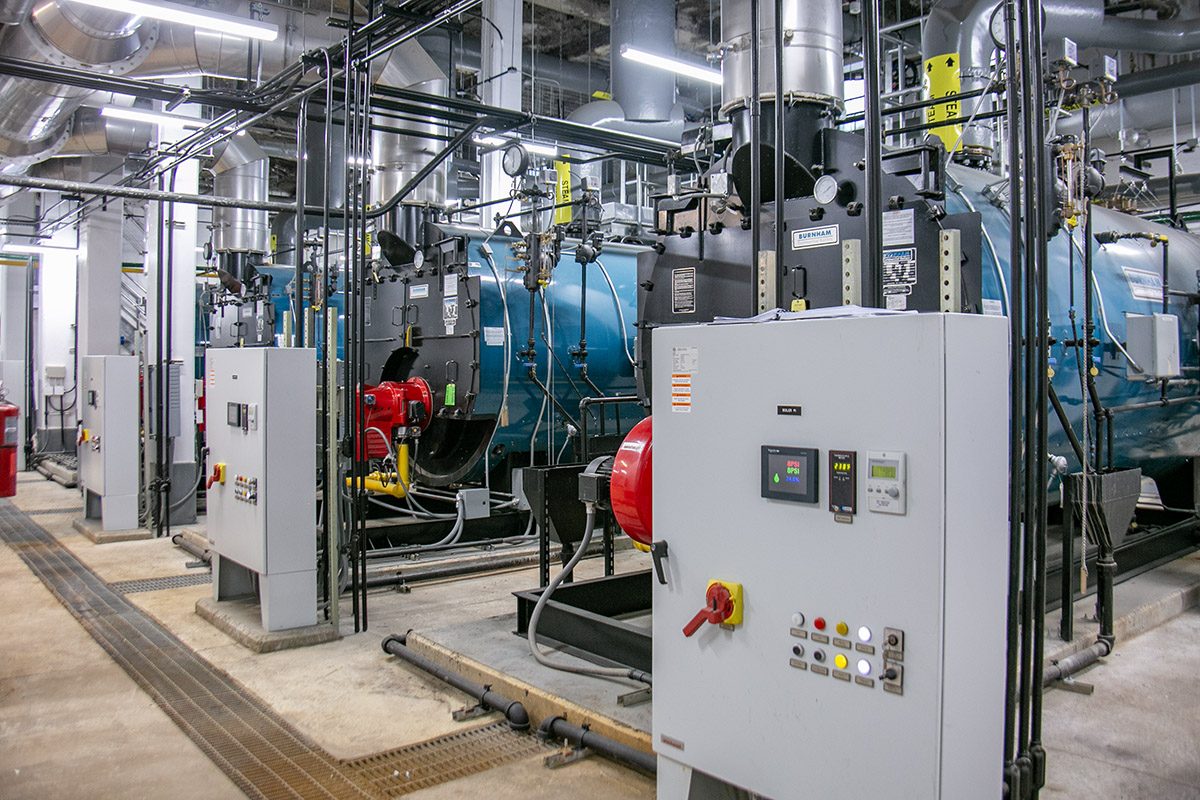
Three of the four new low-pressure steam boilers with individual boiler control panels in Johnson Houses’ Building #7 central heating plant.
At New York City Housing Authority’s (NYCHA) James Weldon Johnson Houses in East Harlem, ten residential buildings depended on central heating equipment dating to 1993. The plant operated beyond the winter heating season because it also supplied steam for domestic hot water production.
Replacing the aging equipment presented an opportunity to change that arrangement. NYCHA undertook a comprehensive upgrade that paired new steam boilers with independent domestic hot water systems throughout the development.
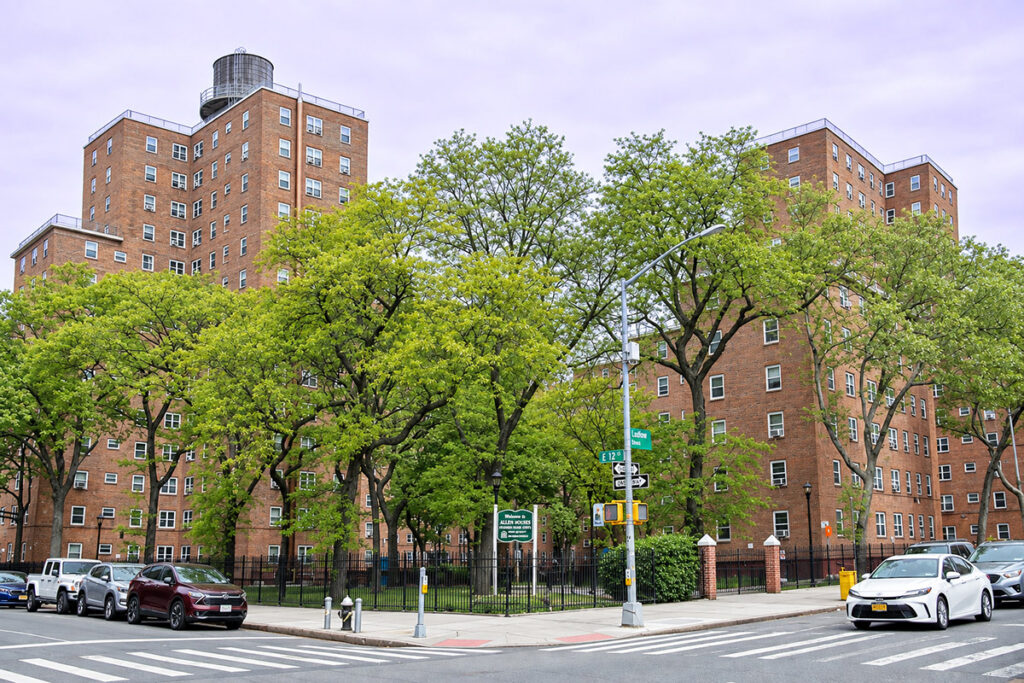
RAND Engineering & Architecture, DPC served as Engineer of Record for MEP and structural work, providing engineering design and construction-phase support. Kordun Construction served as the contractor and Shapiro Construction Management managed construction oversight and kept the the project running smoothly.
Replacing Equipment and Rethinking Operations
In Building #7, five existing central plant boilers were replaced with four new low-pressure steam boilers equipped with natural gas burners. The installation included new condensate receivers, a boiler feedwater tank system, piping, controls, and safety devices.
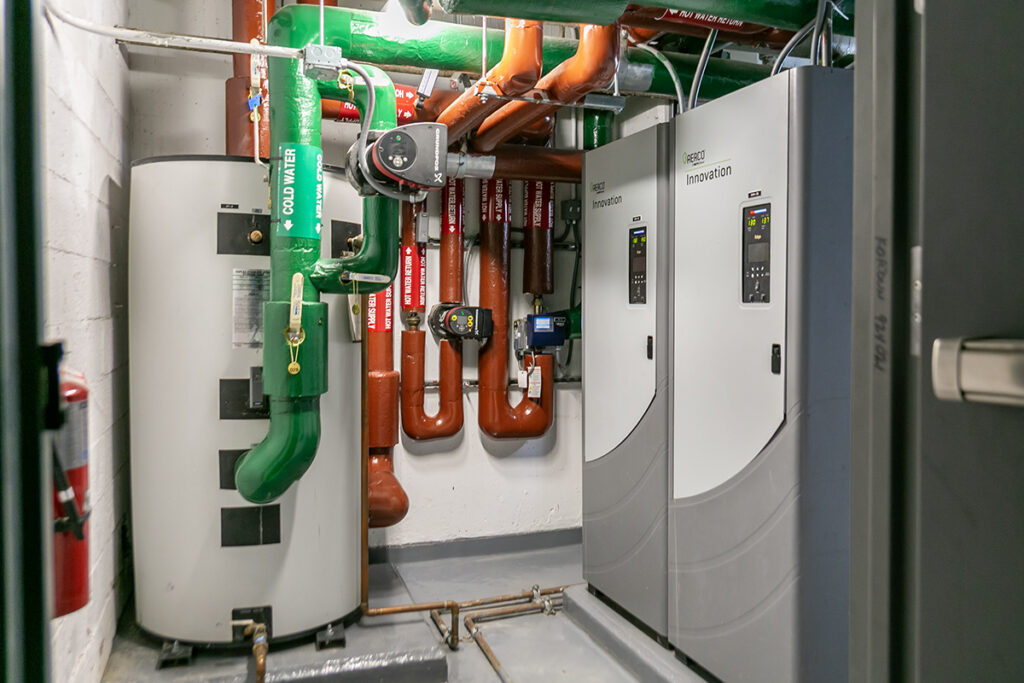
Across the development, new gas-fired domestic hot water boilers and tanks were installed in nine building mechanical rooms and the Building #7 heating plant. These installations replaced the existing steam-to-hot water heat exchangers. As a result, they separated hot water production from the central steam system, a process known as domestic hot water decoupling.
Johnson Houses can now produce hot water without running its central steam plant during the warmer months. Separating the two systems is expected to improve energy efficiency. Moreover, it will help NYCHA reach its carbon emissions reduction targets under Local Law 97. The plant can also be shut down for seasonal maintenance while hot water service continues.
Coordinating the Work in an Occupied Residential Community
Residents continued to need heating and hot water service throughout construction. Temporary mobile boiler facilities and oil storage tanks supported those services while Kordun Construction replaced the permanent equipment.
Installing the new systems required coordinated gas, electrical, plumbing, and venting upgrades. RAND’s scope included Con Edison gas service coordination. In addition, it included outdoor gas meter planning, and design for new gas service and booster equipment. The work also included combustion air systems, electrical upgrades, insulation, drainage improvements, and operating controls.
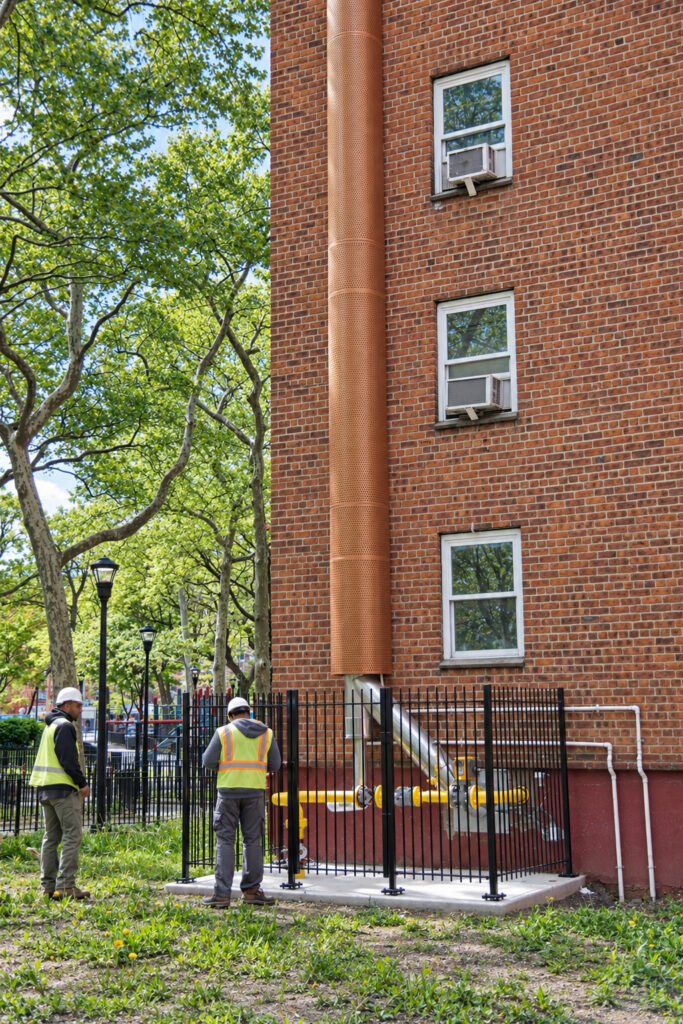
Venting work extended to the building exterior, where a flue was fitted with a perforated metal enclosure in a brick-toned finish to complement the existing masonry facade.
RAND provided engineering support as construction progressed, reviewing field conditions, chimney flue components, and post-installed anchors to address installation details involving the new systems and existing structures.
The Takeaway for Building Owners
A heating plant replacement is an opportunity to address energy use and carbon emissions alongside aging equipment. How heating and hot water are connected, what utility upgrades are needed, and how residents will be served during construction all shape the project’s scope. Additionally, these factors influence long-term performance.
RAND’s building-specific decarbonization studies evaluate existing systems, energy use, and upgrade options to help owners develop a practical path toward meeting applicable Local Law 97 emissions limits. Moreover, incorporating that analysis into equipment replacement planning helps owners address current needs while preparing for future requirements.
Planning a heating plant replacement or domestic hot water upgrade? Contact RAND at 212-675-8844 or info@randpc.com to discuss your property’s needs.