
A Second Engineer’s Opinion Saved This Co-op a Bundle
By Lisa L. Colangelo
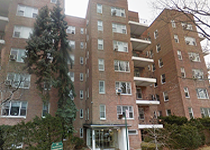
Independence House, a seven-story, 51-unit co-op in the Spuyten Duyvil section of the Bronx, was due for a facelift. Kennita Anderson, the property manager from Robert E. Hill, says water had seeped into the concrete in the terraces since the building opened in 1953, causing damage to the reinforcing bars and supporting steel I-beams. Additionally, there was “spalling” on the undersides of some balconies, where the concrete was flaking and chipping, according to Jim Macho, an architect who is president of the co-op board. “We wanted to get that removed to prevent anyone from getting injured,” he says.
Heavy Handed Hammers
After the original project engineer died unexpectedly, the board hired a design-build contractor who proved to be “heavy-handed,” according to Anderson. The contractor used a jackhammer to remove the spalling which, experts say, is usually performed with smaller hammers. The jackhammers removed more concrete than necessary from the terraces, in turn exposing rebars to the elements, says Macho. “The contractor who was to repair the terraces came back and said all 36 terraces would need to be completely removed and replaced,” he adds. “It was at that time it was decided to get another opinion. I knew the terraces could be fixed, as opposed to a teardown.”
Sticker Shock
The estimated price tag for demolishing and replacing all the terraces was about $1.2 million, which, Anderson says, sent the board went into “sticker shock” and led to a question: “Why demolish all these balconies when we can fix them?”
Macho and the board brought in experts from RAND Engineering & Architecture in 2013 for a peer review of the project. “An engineer can be like a doctor,” says Christine Hobson, PE, a structural engineer with RAND. “You should get a second opinion.”
RAND found holes in one of the concrete terraces – and in the original engineering report. “They said the balconies were never designed correctly to begin with,” Hobson says. “Jim knew something was wrong. It helped that he’s an architect.”
RAND found holes in one of the concrete terraces – and in the original engineering report.
RAND coordinated with Xinos Construction to do probes through the exterior walls and balconies to determine the strength of the steel I-beams and how they were attached to the building. The probes revealed that the original construction was not faulty, as the first engineer had claimed.
Construction work by RAND and Structural Preservation Systems started in 2014. While some terraces needed minor surface repairs, others had been virtually destroyed by the work of the former contractor. In some cases, new concrete and rebar were needed. Workers also discovered some of the balcony line drains were clogged, causing pooling on some of the terraces, which contributed to damage to the concrete. Those problems were fixed and all of the terraces were treated with a membrane system that protects against future water damage, Hobson says.
The work – which was completed in 2016 – ended up costing much less than replacing all the balconies. Construction costs totaled about $650,000, and RAND received about $100,000 for oversight and monitoring of the project.
“Hire a Professional”
Macho’s advice? “Hire a professional engineer or architect to do drawings and specifications for the project, and get involved in the bidding process. They’re also there during the construction to make sure the owner is getting what he’s paying for. Design-build contractors can steer it to be done a certain way. RAND was on top of the contractor during the work.” Adds Hobson: “When you have a bad feeling about something, hire another engineer. We ended up saving them nearly half—and that’s with engineering oversight fees.”
From Habitat Magazine, April 19, 2017.