
Can Drones Be Used for FISP Inspections in NYC?
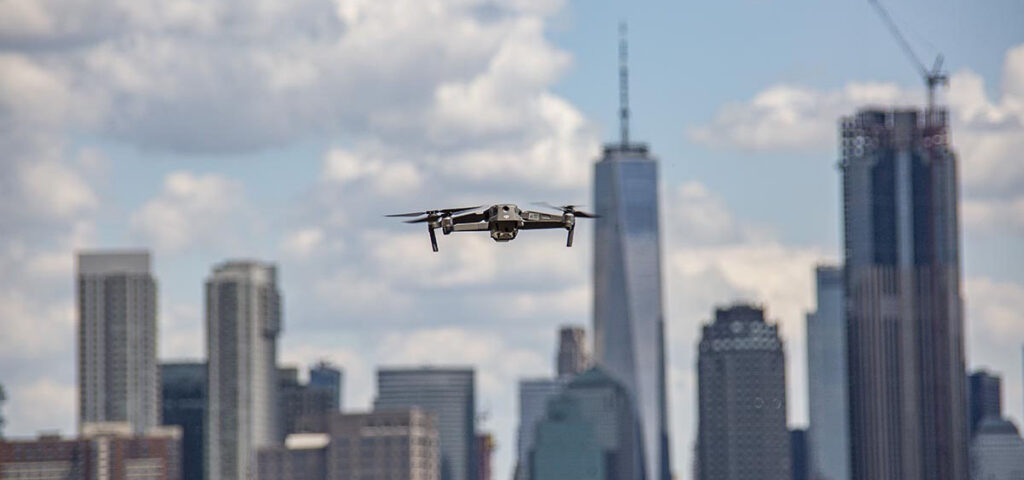
Drone technology has become an increasingly useful tool during FISP inspections in NYC, particularly for large buildings, difficult access conditions, and preliminary facade evaluations. But despite the growing interest around drones, there is still confusion about what they can actually do, how they fit into the inspection process, and what New York City regulations still require.
For building owners and property managers preparing for FISP Cycle 10 inspections, understanding how drones can support New York City’s Facade Inspection & Safety Program, formerly known as Local Law 11, can help them plan earlier for access, budgeting, repair priorities, and inspection logistics.
FISP Still Requires Hands-On Inspections
Under New York City’s Facade Inspection & Safety Program (FISP), buildings taller than six stories must undergo periodic exterior wall inspections performed under the direction of a Qualified Exterior Wall Inspector (QEWI).
These inspections require close-up physical examination of exterior walls and appurtenances at intervals of no more than 60 feet along exterior walls facing a public right-of-way. Access may include suspended scaffolding, rope access, boom lifts, or other methods that allow the QEWI-directed team to physically examine facade conditions.
Drone imagery does not replace these requirements. Even with high-resolution photography and video, drones cannot physically probe masonry, assess loose materials by touch, or perform the close-up investigation required under FISP.
Where Drones Can Be Useful
Drone surveys can support facade evaluations and inspection planning by allowing teams to quickly review large portions of a building exterior, including areas that may be difficult to evaluate from the ground or rooftop.
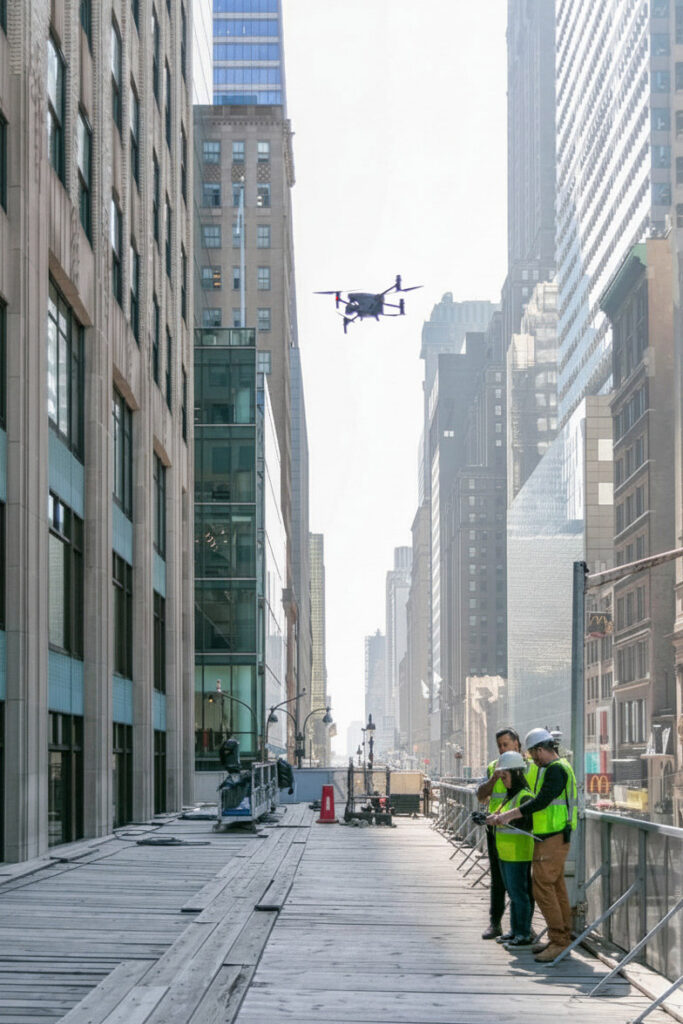
This can include:
- Areas obstructed by neighboring buildings or limited access conditions
- Off-street facades
- Upper facades
- Setbacks and terraces
- Roof bulkheads and penthouses
- Chimneys, parapets, and roof-level structures
- Ornamental elements and projections
- Courtyard elevations
While FISP close-up inspection requirements focus on exterior walls facing a public right-of-way, reviewing off-street facades can still provide valuable information about overall building conditions, maintenance needs, and potential repair priorities.
For buildings with difficult site logistics or extensive facade areas, this additional visibility can help inspection teams better understand existing conditions before suspended scaffolding, rope access, or other close-up inspection methods are mobilized.
Condition Assessment and Quantification
One of the challenges during FISP inspections is obtaining sufficient vantage points to observe critical facade elements, particularly on buildings with setbacks, projections, courtyards, roof bulkheads, parapets, or other areas that are difficult to view from the ground or roof.
Drone surveys can help inspection teams document visible facade conditions from more effective vantage points. High-resolution imagery and telephoto lenses can provide detailed documentation of observed conditions, supporting condition assessment, repair planning, and preliminary quantification before close-up access is mobilized.
For buildings where added visual mapping is useful, drone imagery and photogrammetry can be used to create realistic photo mosaics and 3D models of exterior wall conditions. These tools can help organize visual data, document facade conditions more comprehensively, and support condition assessment and repair planning.
Drone imagery may help identify visible conditions such as:
- Cracking or displacement in masonry
- Deteriorated sealant joints
- Open mortar joints
- Spalling or delaminated materials
- Staining patterns associated with water infiltration
- Deteriorated parapet conditions
- Isolated facade distress that may warrant targeted investigation
This type of preliminary review can help inspection teams document conditions that may be difficult to evaluate from the ground and better plan access sequencing before suspended scaffolding, rope access, or other close-up inspection methods are mobilized.
High-resolution drone photography and video can also support existing condition documentation, repair planning, progress tracking, and long-term comparison across multiple FISP cycles.
Infrared and Thermal Imaging Applications
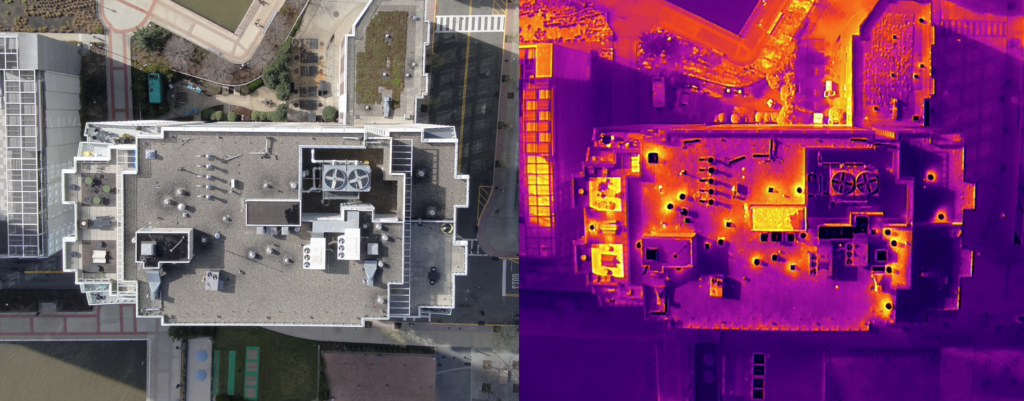
Drones equipped with infrared or thermal imaging technology can add another layer of information during leakage evaluations, facade investigations, roof assessments, and building envelope surveys by helping identify temperature variations that may be associated with moisture intrusion, air leakage, wet insulation, or concealed building envelope conditions.
This can be useful when evaluating large roof areas, difficult-to-access facade locations, recurring leak complaints, or areas where water infiltration is suspected but not visually obvious. These findings can help guide follow-up investigation, testing, repair planning, or targeted probes.
Drones Are One Tool Within a Larger Inspection Strategy
The most effective FISP programs combine multiple investigation methods depending on the building, facade conditions, and access requirements involved.
That may include:
- Ground-based observations
- Binocular surveys
- Drone surveys
- Rope access inspections
- Suspended scaffolding
- Boom lifts
- Hands-on probes and testing
- Exploratory openings where needed
Drone technology works best when integrated into a broader facade inspection strategy led by experienced engineers, architects, and QEWIs who understand how to interpret building conditions and navigate New York City’s compliance requirements.
What the 2025 NYC FISP Study Says About Drones
As part of the City’s 2025 FISP study examining facade safety, inspection requirements, and sidewalk shed reform, the study recommends launching a pilot program for drones and other emerging technologies, including photogrammetry and computer vision, to evaluate their accuracy against traditional hands-on inspections and identify where they may help reduce physical access requirements.
While current FISP rules still require close-up inspections, the study signals that drones may play a larger role in future inspection cycles as DOB continues evaluating inspection methods and facade safety strategies.
Planning Ahead for FISP Cycle 10
As FISP Cycle 10 progresses, many buildings are already experiencing tighter scheduling availability and longer lead times for inspections, access equipment, and repair work.
For buildings with difficult access conditions or extensive facade areas, incorporating drone surveys early in the process can help inspection teams better understand visible building conditions before close-up inspections are performed. This preliminary review can support access planning, help identify areas that may warrant closer review, and inform how suspended scaffolding, rope access, or other close-up inspection methods are deployed.
Drone surveys in New York City also require advance planning, including FAA-compliant operation and applicable NYC takeoff/landing permits. NYPD permit applications generally must be submitted at least 30 days before the proposed takeoff or landing date.
At RAND, drones are used as part of a comprehensive facade evaluation approach that combines technology with hands-on inspection experience, practical access planning, and long-term repair strategy. RAND’s drone survey team also coordinates the flight planning, FAA-compliant operation, applicable NYC takeoff/landing permits, and related survey logistics as part of the inspection planning process.
Watch our rope access and drone survey teams work together during a facade inspection and exterior evaluation: https://www.youtube.com/watch?v=dZxR9Z10o1E
Preparing for an Upcoming FISP Filing?
RAND can help evaluate the right inspection and access strategy for your building, including where drone surveys, rope access, and close-up facade inspections may be most effective.
Because drone surveys in New York City require advance planning, including FAA-compliant operation and applicable NYC takeoff/landing permits, early coordination is recommended.
Contact RAND to discuss your building’s upcoming FISP inspection: 212-675-8844 or fisp@randpc.com.
Why RAND
- Multidisciplinary engineering and architectural team under one roof
- Employee-owned firm serving New York City and the surrounding region since 1987
- Over 4,000 facade inspections filed across New York City
- QEWI-led FISP inspections and facade evaluation expertise
- In-house drone surveys performed by FAA-certified pilots, plus rope access, infrared thermography, and advanced investigation capabilities
- Project support from investigation through construction administration
- Longstanding experience working with owners, boards, property managers, institutions, and commercial clients across thousands of properties