
Can FISP Cover Your Annual Parapet Inspection?
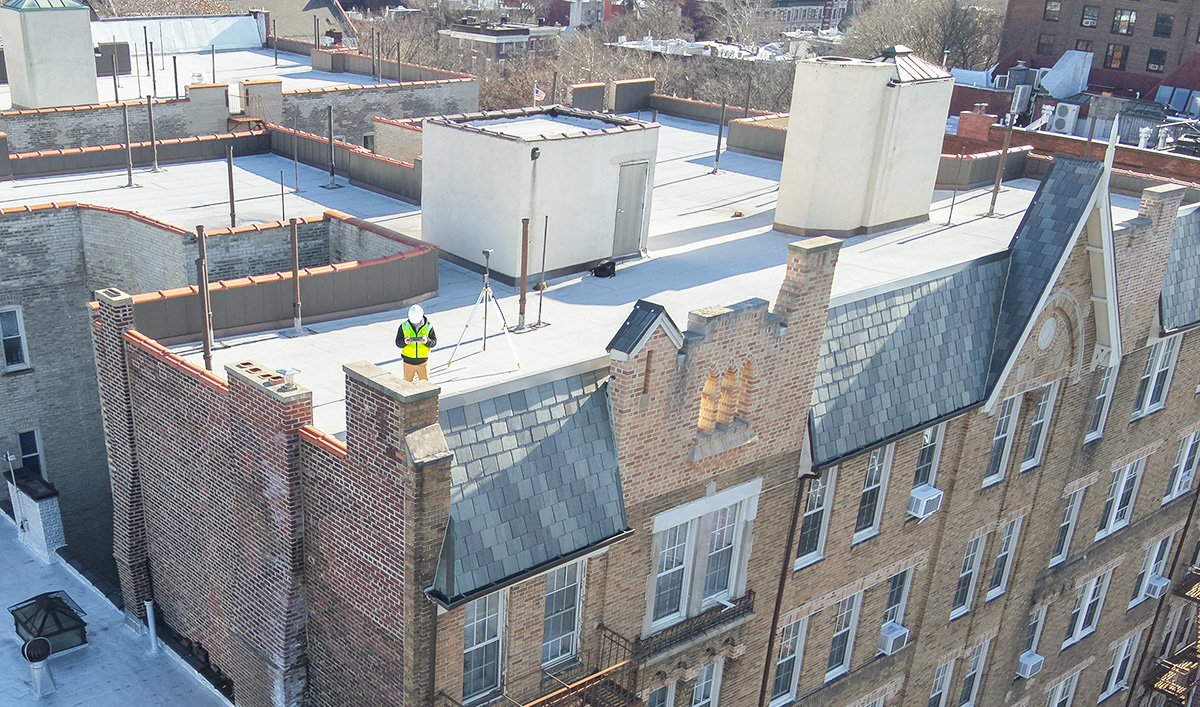
If your building is already undergoing FISP this year, it may seem logical to assume the annual parapet observation is covered too.
In some cases, it can be. But it depends on how the inspection is performed and how the report is documented.
FISP and annual parapet observations both address exterior building safety, but they are separate requirements. FISP applies to buildings greater than six stories and is filed with DOB as part of the exterior wall inspection cycle. Parapet observations are required annually under Local Law 126 of 2021 and DOB’s annual parapet observation rule, 1 RCNY §103-15, for buildings with parapets fronting the public right-of-way, regardless of building height, with limited exceptions.
When Can a FISP Report Cover the Annual Parapet Observation?
A FISP filing does not automatically cover the annual parapet observation for that year. DOB’s parapet FAQ states that only if a FISP report includes all required parapet-rule information id no separate parapet report required. The owner must keep a copy of the FISP report available upon request.
What May Need to Be Included?
The annual parapet rule has specific inspection and documentation requirements. It requires close-up inspection of the entirety of all parapets along public right-of-way elevations. Other parapets may be inspected at the inspector’s discretion.
A FISP inspection may focus on representative close-up locations and should include at least the height of parapets not along a public right-of-way. For annual parapet observations, all parapets along public right-of-way elevations must be inspected, not just representative locations. The report must also include specific parapet information, such as:
- The location of the parapet or parapets observed
- Parapet construction, including material, height, and thickness
- The general condition of the parapet
- Whether unsafe conditions were found
- Actions taken or needed to address unsafe conditions
- Repairs made since the previous report
- Documentation of conditions at the time of observation
The observation must also address whether the parapet is plumb, whether there is excessive deterioration, and whether parapet appurtenances such as railings, telecommunications equipment, roof access rails, gooseneck ladders, fire escape handrail attachments, and signs are stable. FISP inspections do not normally address all of these criteria, including parapet thickness and degree of plumb.
If an unsafe parapet condition is found, the person performing the observation must immediately notify DOB. The owner must also install public protection as needed and have the unsafe condition remedied.
Common Misconceptions
Misconception: FISP always covers the annual parapet observation.
Not necessarily. FISP may satisfy the annual parapet observation requirement only if the FISP report includes all information required by DOB’s annual parapet rule.
Misconception: Only FISP buildings need annual parapet observations.
Incorrect. The annual parapet rule applies to buildings with parapets fronting the public right-of-way, regardless of height, with limited exceptions.
Misconception: Local Law 126 only applies to parking garages.
Incorrect. Local Law 126 of 2021 also includes the annual parapet observation requirement. Many owners and managers associate LL126 with parking structure inspections, but parapet observations are a separate obligation under the same local law.
Misconception: The annual parapet report is filed with DOB.
No annual submission is required. Owners must keep the report on file for at least six years and provide it to DOB upon request.
Misconception: A representative FISP drop is always enough for the parapet observation.
Not necessarily. The parapet rule requires close-up inspection of the entire parapet along public right-of-way elevations. If the FISP inspection does not cover the full parapet scope required by the rule, additional observation or documentation may be needed.
Misconception: Every parapet on the building must be inspected under the annual parapet rule.
Not exactly. At a minimum, the rule requires inspection of parapets fronting the public right-of-way. Other parapets may be inspected at the inspector’s discretion.
What Owners and Managers Should Ask
If your building is due for FISP this year, ask:
- Will the annual parapet observation be included in the FISP scope?
- Will the FISP report include all information required by DOB’s annual parapet rule?
- Will all parapets along public right-of-way elevations be observed, rather than only representative locations?
- Will the report document parapet construction, condition, plumbness, appurtenances, prior repairs, unsafe conditions, and actions needed or taken?
- If an unsafe parapet condition is found, what immediate notifications and public protection measures are required?
Before You Assume FISP Covers It
If your building is undergoing FISP this year, ask early whether the annual parapet observation can be incorporated into the inspection scope and report.
When planned correctly, one coordinated exterior review may help avoid unnecessary duplicate work. When not planned correctly, the building may still need separate annual parapet observation documentation.
FISP Cycle 10 Timing
For buildings subject to FISP, Cycle 10 filing windows are based on the last digit of the building’s block number:
- Sub-Cycle 10A: blocks ending in 4, 5, 6, or 9
Filing period: February 21, 2025 to February 21, 2027 - Sub-Cycle 10B: blocks ending in 0, 7, or 8
Filing period: February 21, 2026 to February 21, 2028 - Sub-Cycle 10C: blocks ending in 1, 2, or 3
Filing period: February 21, 2027 to February 21, 2029
If your building is in an active or upcoming FISP sub-cycle, this is a good time to ask whether the annual parapet observation requirements can be incorporated into the FISP scope and report.
How RAND Can Help
RAND’s exterior wall team includes Qualified Exterior Wall Inspectors, engineers, architects, rope access technicians, and drone pilots experienced in facade inspections, parapet observations, exterior repairs, and NYC local law compliance.
For buildings undergoing FISP, RAND helps determine early whether the annual parapet observation requirements can be incorporated into the inspection scope and report, or whether separate documentation is needed. This helps owners and managers understand what is covered before the inspection and report are completed.
If your building is undergoing FISP this year, contact RAND to discuss your building’s filing cycle, parapet locations, and documentation needs.