
How to Compare FISP Inspection Proposals
What NYC owners and managers should look for beyond the total fee
Before comparing FISP fees, owners and managers need to know whether each firm has priced comparable work.
Under New York City’s Facade Inspection and Safety Program (FISP), owners of buildings greater than six stories must have their exterior walls and appurtenances inspected every five years by a Qualified Exterior Wall Inspector (QEWI) and file a report with the Department of Buildings. The inspection includes close-up examinations, which require careful planning for access, staffing, and site conditions.
FISP proposals are not always based on the same inspection plan or structured the same way. The number of inspection locations, field days, and inspectors may vary, and access, DOB fees, or additional services may be billed separately. A consultant’s FISP experience can affect how effectively the inspection, report, and DOB review are managed, while the depth and availability of its QEWI team can affect scheduling and capacity. Understanding those differences before selecting a provider helps owners and managers compare the work being proposed and avoid unexpected costs later.
What inspection plan is being proposed?
To determine whether firms are pricing comparable work, start with the inspection plan behind each proposal. Look for:
- The building’s height and the length of its facades facing a public right-of-way
- The applicable filing sub-cycle and deadline, and the status of prior filings
- The anticipated number of close-up inspection locations, commonly called drops
- The number of inspection days and inspectors included
- The proposed access method
FISP requires close-up examinations at intervals of no more than 60 feet along each facade elevation fronting a public right-of-way. The QEWI selects the locations based on the facade construction, prior repair work, previous filings, and areas most likely to reveal significant conditions.
Owners should provide each consultant with the same available records, particularly the previous FISP report and documentation of facade repairs, probes, testing, or known access restrictions. If the firms are working from different information, they may not be pricing the same work.
When the proposed numbers of drops or inspection days differ, ask each consultant how the plan was developed.
Who will inspect the facade, and who will provide access?
Close-up examinations may be performed using industrial rope access, a motorized scaffold, a boom lift, a supported scaffold, or a combination of methods. The right approach depends on the building’s configuration, roof conditions, anchorage, balconies, setbacks, and required inspection locations.
The firm inspecting the facade and the contractor providing access may not be the same company, so each proposal should make the division of responsibilities clear.
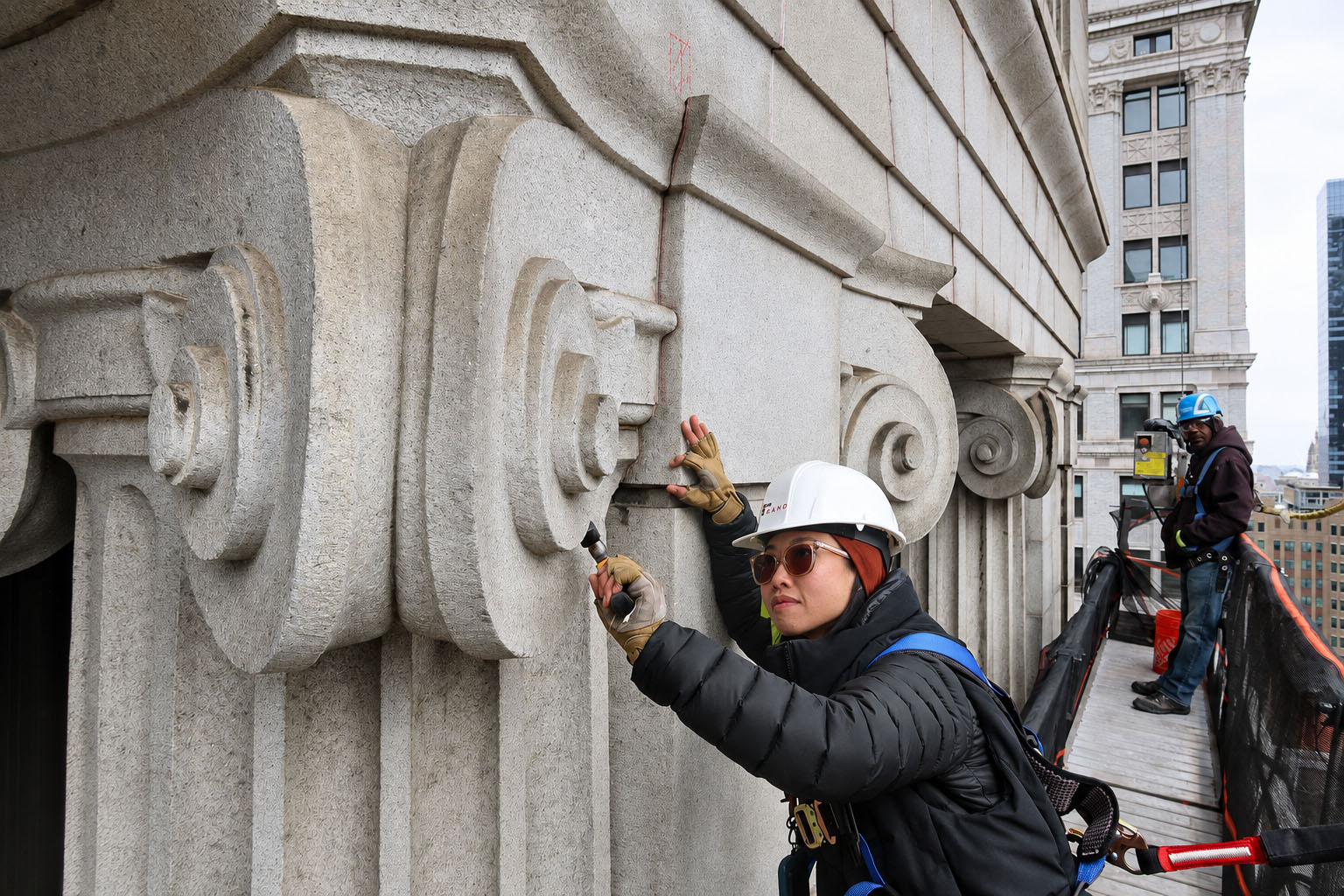
RAND has a large team of QEWIs, including QEWIs who perform hands-on close-up examinations using industrial rope access. Our certified rope access inspectors are members of our in-house Facade & Roofing team. This keeps the close-up examination, QEWI review, and report preparation within one team while providing the capacity to manage multiple inspections and larger portfolios.
When contractor-provided access is required, RAND obtains bids for the owner’s approval and coordinates the inspection with the selected contractor. Depending on the owner’s preference and the proposal structure, the owner may retain and pay the contractor directly, or RAND may include the rigging contractor as a subcontractor. Each proposal identifies which arrangement applies and whether the access cost is included or paid separately.
For each proposal, confirm:
- Which access method is anticipated
- Who will perform the hands-on examination
- Whether the access contractor will be retained by the owner or the consultant
- Whether the access contractor’s fee is included or excluded
- Who will obtain bids and coordinate the contractor
- How many drops or days the contractor’s price covers
- Whether permits, testing, mobilization, or other access costs may apply
For suitable buildings, rope access can reduce mobilization time, cost, and disruption. The access method should still be based on the building’s configuration and the locations the QEWI needs to examine.
What does the professional fee include?
The total shown in a FISP proposal may represent the consultant’s professional fee, not the owner’s complete inspection budget.
The proposal should clearly state whether the fee covers:
- Visual inspection
- Hands-on inspection
- Report preparation
- Condition photographs and location plans
- Owner review
- Submission through DOB NOW: Safety
Depending on the proposed arrangement, the access contractor’s fee may be included in the total or paid separately by the owner. Other separate costs may include the DOB filing fee, access-related testing or permits, and probes or other investigation identified during the inspection.
Each proposal should identify which costs are included and which the owner will pay separately so they can be considered alongside the consultant’s professional fee.
How does the work move from authorization to filing?
Before the inspection, the consultant reviews available records, develops the inspection plan, and coordinates access. Afterward, the consultant prepares the report, reviews the findings with the owner, and submits the filing through DOB NOW: Safety.
Extensive FISP experience can make a meaningful difference during DOB review. A consultant familiar with DOB’s filing requirements can anticipate how conditions should be documented, prepare a clearer submission, and respond efficiently if DOB issues comments or requests corrections.
Compare the anticipated schedule from authorization to inspection and from inspection to filing. Also confirm whether the fee includes responses to DOB comments, corrections, and resubmission if required.
What could require a separate fee?
Some additional work cannot be identified until the inspection is underway. This may include:
- Additional inspection days, access locations, or return visits
- Probes, testing, or further investigation
- An extension request following an Unsafe filing
- A post-repair inspection or amended or subsequent filing
The proposal should explain how services outside the original scope will be authorized and priced.
If the QEWI identifies SWARMP or Unsafe conditions, repair design, construction-phase services, and any required post-repair inspection or filing would be addressed under a separate proposal.
FISP Proposal Review Checklist
Before selecting a FISP inspection provider, confirm that each proposal clearly identifies:
☐ The proposed inspection plan
☐ The number of drops, inspection days, and inspectors included
☐ Who will perform the hands-on inspection and the experience and capacity of the QEWI team
☐ Who will provide access and how the access contractor will be retained and paid
☐ What is included in the professional fee
☐ Which costs the owner will pay separately
☐ The anticipated schedule from authorization through filing
☐ What could require additional services or fees
A lower fee may reflect a different inspection plan, fewer included services, or more costs paid separately. If these details are not clear, you may not be comparing apples to apples.
How RAND Can Help
RAND has filed more than 4,500 FISP reports for buildings throughout New York City, giving our team extensive experience with DOB’s filing and review process. Our staff includes a large team of QEWIs, many of whom perform hands-on examinations, along with engineers, architects, facade specialists, FAA-licensed drone pilots, and in-house certified rope access inspectors experienced with a wide range of exterior wall systems and access conditions.
This depth gives RAND the capacity to manage inspections for individual properties and larger portfolios. It also allows our team to prepare well-documented reports and respond efficiently if DOB raises questions or requests revisions.
Planning a Cycle 10 inspection? Contact RAND for a proposal.